
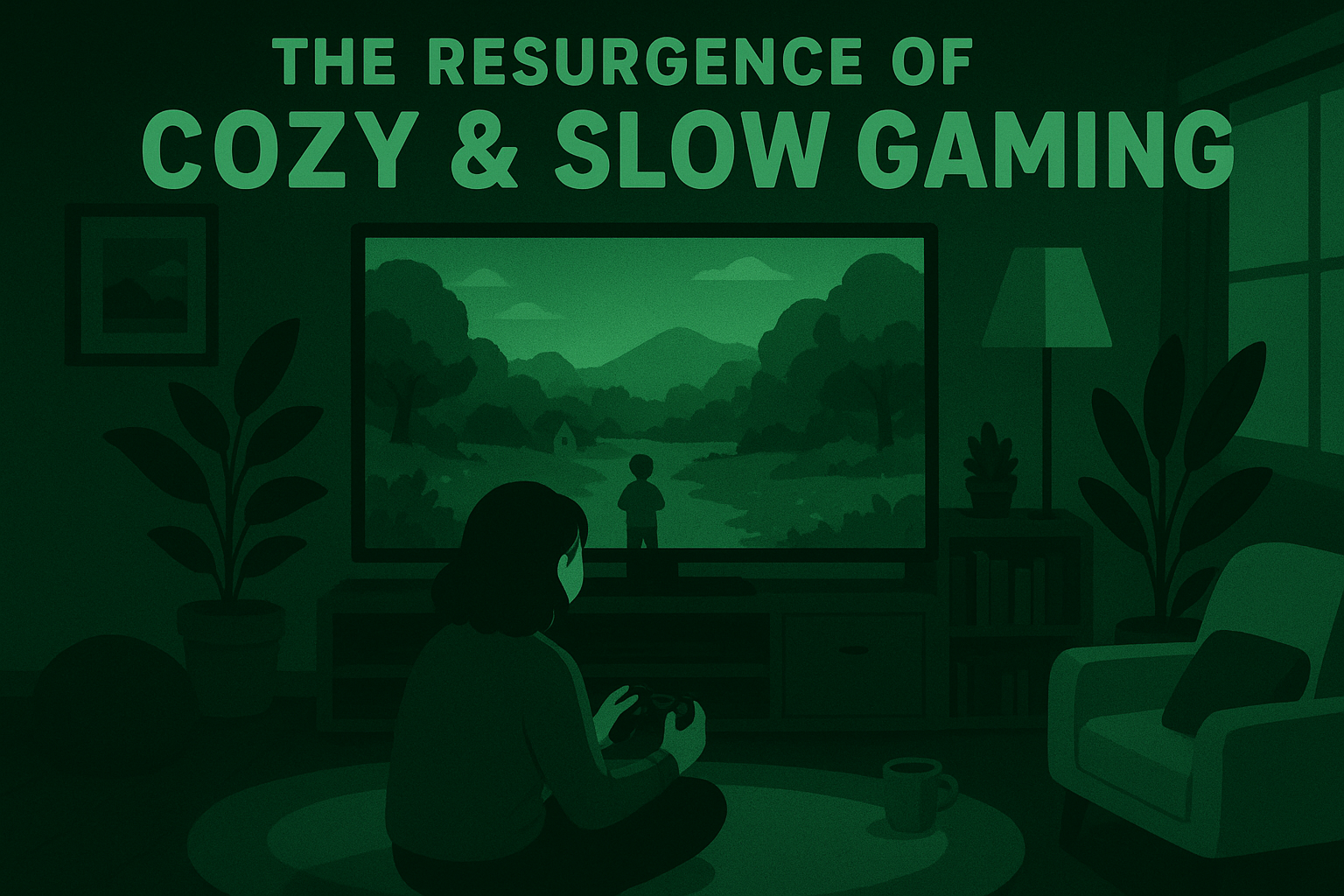
In an era dominated by fast-paced shooters, competitive battle royales, and high-stakes esports, another genre of gaming has been quietly but steadily rising to prominence: cozy and slow gaming. These games are designed not to test reflexes or competitiveness but to create a sense of calm, comfort, and mindfulness. With more players seeking relaxation and a digital escape from the noise of everyday life, cozy gaming is enjoying a resurgence that feels less like a trend and more like a cultural shift in how we approach interactive entertainment.
Why Cozy Gaming Is Gaining Popularity
The gaming industry has traditionally thrived on adrenaline-driven titles, but the global lifestyle shift during and after the pandemic redefined how people interact with media. With increased screen time and heightened stress levels, gamers began gravitating toward experiences that prioritize relaxation over tension. Cozy games, with their gentle visuals, soft soundtracks, and slower progression systems, became the perfect antidote.
Titles like Animal Crossing: New Horizons and Stardew Valley exploded in popularity because they offered a slower rhythm of life. These games don’t demand victory but instead encourage players to engage in activities like farming, decorating, fishing, or simply socializing with charming in-game characters. This low-pressure approach aligns with broader lifestyle trends emphasizing mindfulness, sustainability, and self-care.
The Elements of Cozy & Slow Games
Cozy games share a unique set of qualities that distinguish them from mainstream genres:
-
Soothing Aesthetics – Calming color palettes, soft lighting, and wholesome character design help create a welcoming atmosphere.
-
Nonlinear Gameplay – Progression is flexible. There’s no “right way” to play, allowing players to choose their pace and activities.
-
Gentle Soundtracks – Music in cozy games often mirrors natural sounds or lo-fi beats, fostering relaxation.
-
Low Stakes – Instead of punishing failure, these games focus on exploration, creativity, and personal expression.
This design philosophy flips the typical gaming script. Instead of measuring success in wins or points, cozy gaming measures fulfillment in moments of joy and tranquility.
The Psychological Benefits
Studies in psychology suggest that slow-paced, low-stress digital activities can help reduce anxiety and improve focus. Unlike high-stakes competitive games, cozy titles allow players to disconnect from external stressors without the risk of introducing new frustrations. They foster mindfulness, similar to meditation, by immersing players in repetitive yet enjoyable tasks like tending virtual gardens or crafting items.
Moreover, cozy games often emphasize community and empathy. Titles such as Spiritfarer introduce themes of companionship and emotional healing, providing players with a safe space to process deeper feelings. This emotional depth, wrapped in gentle gameplay, enhances their therapeutic value.
The Cultural Movement of Slow Gaming
Much like the “slow living” and “slow food” movements, slow gaming encourages people to savor experiences rather than rush through them. In a world increasingly obsessed with speed and efficiency, these games remind us to take a breath. The resurgence also coincides with the growing popularity of streaming platforms, where cozy games have found a loyal audience. Streamers cultivate relaxed spaces with titles like Cozy Grove or Ooblets, inviting viewers into a shared atmosphere of comfort.
The Future of Cozy Gaming
The resurgence of cozy and slow gaming is far from a passing fad. Developers are responding to demand with innovative titles that expand the genre’s horizons. Hybrid models, blending cozy mechanics with light adventure or narrative depth, are emerging. For example, Dordogne combines watercolor-inspired visuals with emotional storytelling, while Unpacking turns the mundane act of arranging belongings into a meditative puzzle.
As players continue seeking more mindful and meaningful experiences, cozy games will remain a staple of the industry. They not only provide an alternative to traditional gaming but also validate the idea that play can be a source of peace and balance in our lives.
Final Thoughts
The resurgence of cozy and slow gaming represents more than just a new wave of titles—it’s a reflection of changing values among gamers. In a high-speed, always-online world, these games offer a gentle retreat. They remind us that gaming can be more than competition; it can be about comfort, creativity, and connection. And as the trend grows, it’s clear that cozy gaming isn’t slowing down anytime soon.